What Size Skid Steer Do You Need for Land Clearing?

Choosing the right skid steer for land clearing will set you up for profitable, efficient work on every job. When your machine matches the attachments you need, you can move through projects faster, keep your equipment running smoothly and get the most value from your investment.
The key to getting it right is understanding which skid-steer size you need for clearing, based on the attachments you’ll run. This guide shows you how to match your machine to your land clearing equipment size so you can work efficiently, protect your investment and maximize profitability on every acre you clear.
How to Choose the Right Size Skid Steer for Clearing
Follow these steps to eliminate guesswork when choosing the right size skid steer.

Step 1: Define Your Primary Land Clearing Jobs
Start with the work itself. Look at the type of vegetation, terrain and job size you’ll typically encounter. Light maintenance, like grass and saplings, requires far less machine capability than clearing mixed brush and small trees for development. True forestry work involving dense woods and large-diameter trees demands the most powerful land-clearing equipment in terms of size and hydraulic flow.
Be honest about the scope of your projects — if you occasionally take on heavier work, plan for that rather than sizing down and struggling when those jobs arrive.
Step 2: Select the Right Attachment for the Job
Once you’ve defined the work, choose the attachment designed to handle it. The three main categories of clearing attachments are brush cutters, forestry mulchers and grapples.
A brush cutter generally handles material up to 4-6 inches in diameter and works well for lighter vegetation and mixed brush. A forestry mulcher turns dense brush and trees into mulch on-site, making it ideal for land clearing where you want material processed rather than piled. A grapple is your cleanup and debris handling solution for moving logs, root balls and brush piles once the cutting is done. Each attachment category has different demands that determine what your skid steer needs to deliver.
Step 3: Identify Your Minimum Machine Specs
This is where you match the machine to the attachment you selected in Step 2. You’ll need to know how much horsepower your machine requires for land clearing, along with gallons per minute (GPM) and rated operating capacity (ROC) for safe, effective operation.
Horsepower drives the machine’s ability to move and operate under load, while GPM measures hydraulic flow and determines whether your skid steer can run high-demand attachments like mulchers. ROC tells you how much weight the machine can safely lift and carry, which matters when you’re running heavy attachments or moving debris.
How Size Affects Productivity and Cost-Effectiveness
The size of your skid steer directly impacts your bottom line. An undersized machine slows down your work, strains components and forces you to avoid the high-flow attachments that would make you more profitable. You’ll deal with overheating hydraulics, frequent stops to let the machine cool and jobs that take longer than they should. That lost time adds up fast.
An oversized machine creates different problems — higher initial cost, higher fuel consumption and potential difficulty accessing smaller jobsites. The goal is to be right-sized for the work you do, not just big. Match your machine to your attachments, and you’ll operate efficiently without wasting money on capacity you don’t need.
How Attachments Dictate Your Skid Steer’s Required Size
Your skid steer’s size requirements come from the attachments you plan to run. Here’s what each type demands from your machine:
- Brush cutters: These tools are ideal for lighter vegetation and mixed brush work. Many models can run on standard-flow hydraulics, making them accessible for a wider range of machines. Heavy-duty brush cutters significantly increase power requirements. You’ll need to check the product specs for GPM requirements by model to match your skid steer’s hydraulic capacity to the cutter you need.
- Forestry mulchers: High-flow hydraulics are often necessary for effective mulching. Without enough hydraulic flow, the mulcher drum will stall under heavy load, and you’ll spend more time waiting than working. High-flow systems keep the drum spinning through dense material, which translates directly to higher productivity on the job.
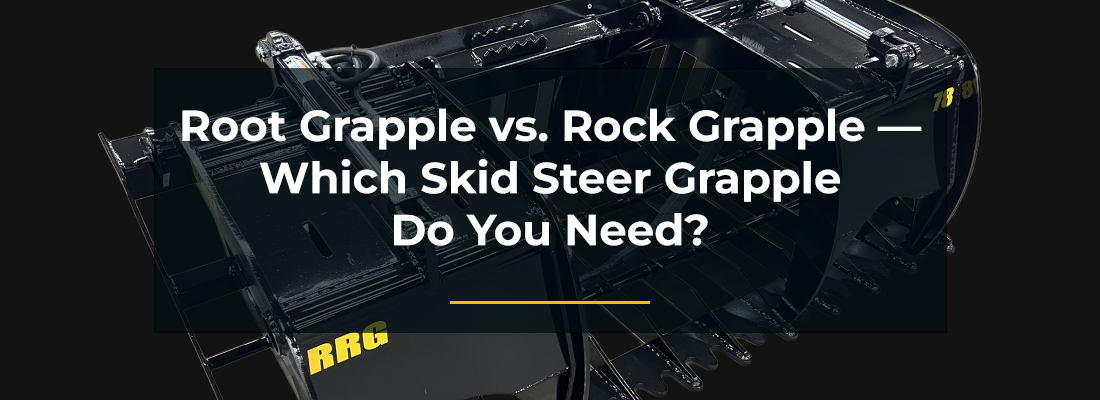
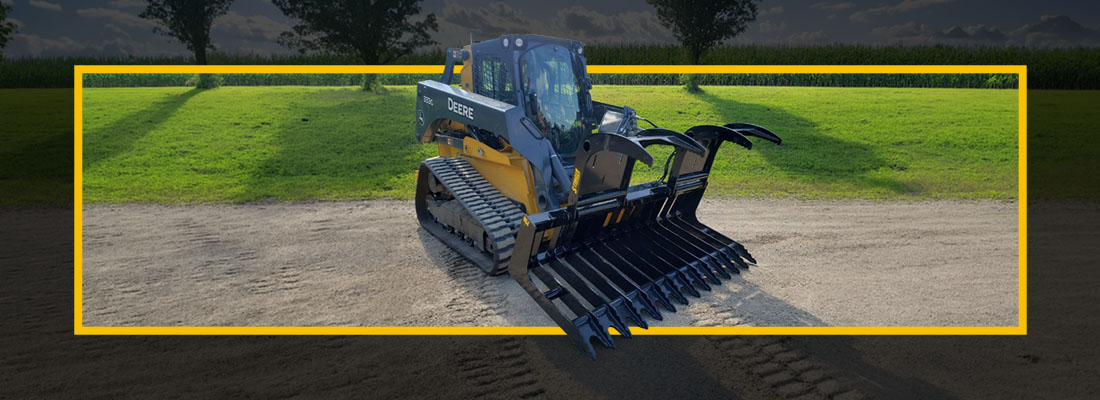
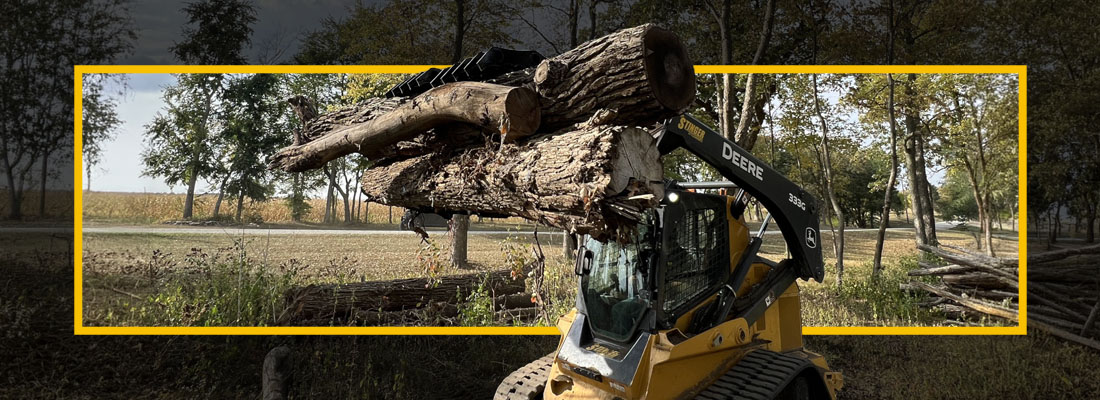
- Grapples and rakes: For these attachments, rated operating capacity and machine weight are the most important factors. You’re lifting and moving heavy, awkward debris, like logs and root balls, often on uneven ground. Your skid steer operating capacity for brush clearing needs to comfortably exceed the attachment weight plus the load you’re handling. Undersizing here creates safety risks and limits what you can move in a single pass. Look at the different grapples available to match the right solution to your hauling needs.
Matching Machine Tiers to Clearing Jobs
See how different skid steer sizes pair with different clearing jobs based on your attachment demands.
Light-Duty
This tier fits contractors working on smaller residential lots, farm maintenance or light brush removal where maneuverability matters as much as power. Your skid steer doesn’t need to be massive — it needs to be matched to the attachment.
For lighter clearing work, this tier delivers the agility and efficiency you need without over-investing in capacity you won’t use.
Medium-Duty
This tier encompasses the versatile contractor who takes on a variety of jobs, such as commercial lot clearing, mixed vegetation and small trees. Your machine needs to handle more aggressive attachments and higher hydraulic demands.
This includes mulchers, brush cutters and other powerful Stinger tools that effectively transform challenging sites. The medium-duty tier represents the sweet spot for contractors who need serious capability across a range of clearing jobs.
Heavy-Duty
This is the specialist focused on large-scale clearing, dense acreage and large-diameter trees. The machine must be a high-powered, stable platform. This is serious work that requires serious equipment.
Investing in a heavy-duty machine ensures maximum uptime and performance on the most arduous clearing contracts, especially for forestry-grade jobs. At this level, every spec matters — hydraulic flow, machine weight and stability all contribute to safe, productive operation on demanding jobs.
Equip Your Operation With Stinger Attachments
The right skid steer size means nothing without the right attachments to back it up. At Stinger Attachments, we build American-made land clearing tools designed to handle the toughest jobs you’ll face.
From brush cutters and forestry mulchers to heavy-duty grapples, every attachment we make is built with high-grade steel and backed by excellent customer service at every step. Whether you’re clearing residential lots or tackling dense acreage, we’ll help you find the perfect match for your machine. Contact our team or find a dealer near you to get expert advice and equip your operation for success.