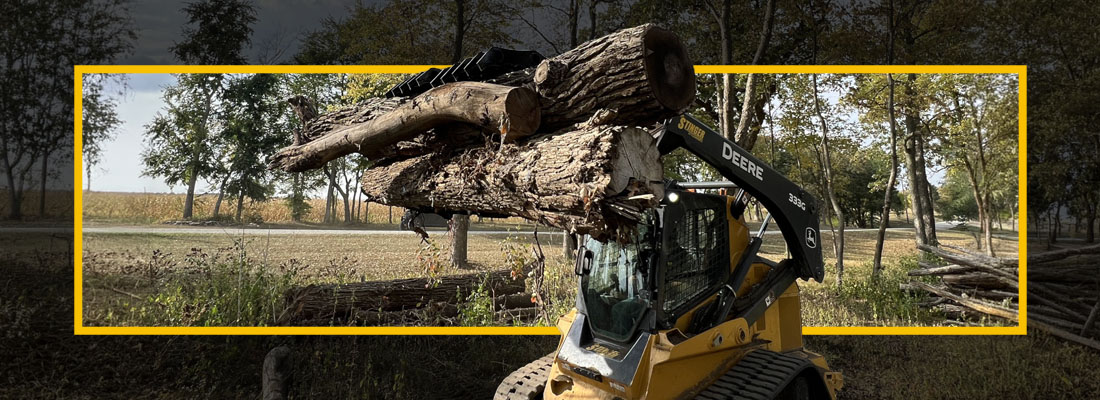
Root Grapple vs. Rock Grapple — Which Skid Steer Grapple Do You Need?

Choosing between a root grapple and a rock grapple is simple once you understand the best uses for each type.
As a general rule, you’ll want to use a root grapple if you’re clearing brush, logs or stumps. If you’re pulling rocks from a field or cleaning up demolition debris, you’ll likely need a rock grapple. The difference comes down to tine spacing. Wide tines grab organics and let dirt fall through, while tight tines catch rocks and sift soil.
Both types of skid steer grapples are built tough for different jobs. This comparison helps you figure out which option you need.
What Is a Root Grapple?
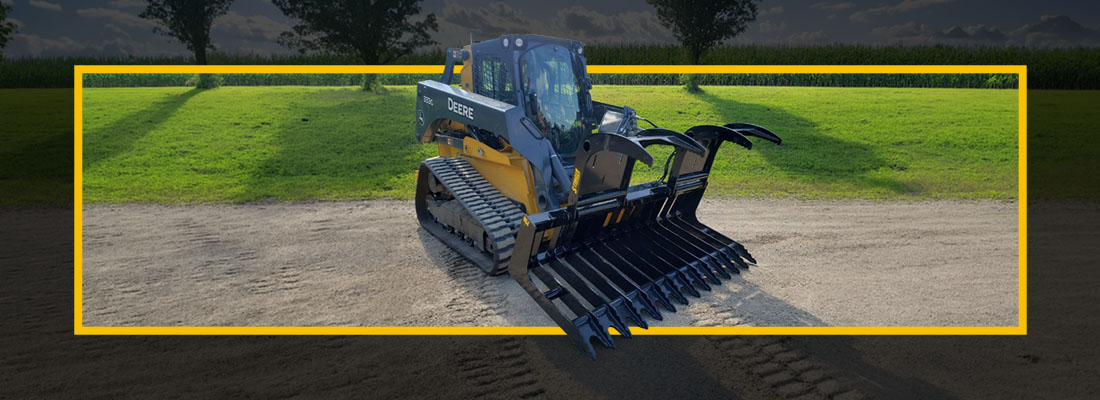
A root grapple is a land-clearing attachment designed to grab and hold large organic material while letting dirt fall back to the ground. Wide tine spacing is the defining feature — root grapples typically run 9-inch spacing between tines. That space is intentional. You want topsoil to stay behind while brush, logs, stumps and root balls move out.
The wide tine design makes this tool ideal for land clearing, brush grapple work and storm cleanup. Known as a root rake in some markets, it’s built for jobs where you’re moving large debris fast without hauling off valuable topsoil. Root grapples are rated for machines with 55+ horsepower (hp) and handle firewood stacking, lot clearing and forestry work.
A trade-off is that wide tines mean rocks and small debris fall through. If rock removal is your primary job, this isn’t your tool. But for operators clearing overgrown property or cleaning up after timber work, the root grapple gets it done.
What Is a Rock Grapple?
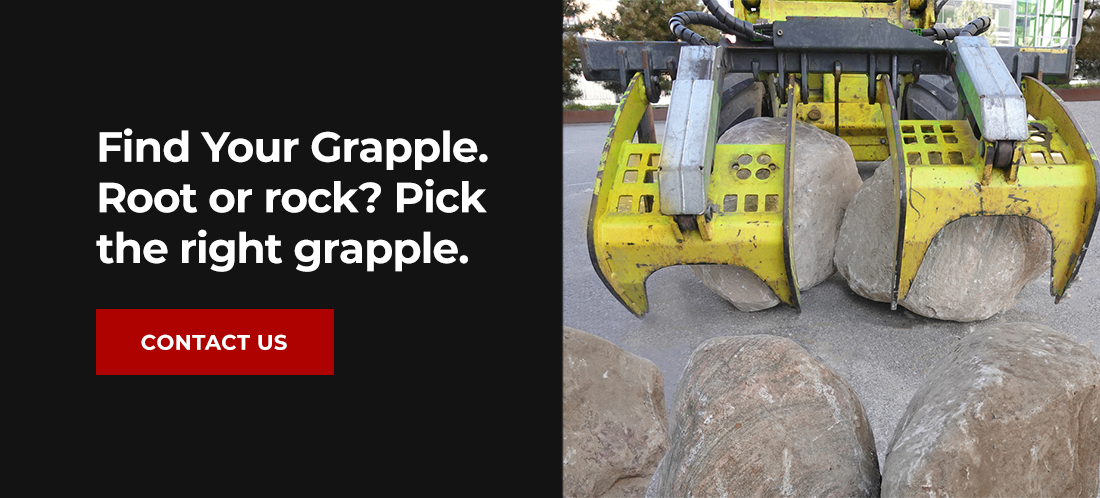
A rock grapple, also called a skeleton grapple or grapple bucket, is built with tight tine spacing to catch rocks and debris while sifting dirt back into the ground. Rock grapples feature 3-inch curved tines engineered to hold rocks securely while soil drops through on every pass. This is the attachment you reach for when you need to clean a field without losing topsoil.
The soil-sifting function is what makes this tool valuable. Farmers clearing rocky fields before planting, contractors cleaning demolition sites and landscapers prepping grading projects all rely on tight tine spacing to separate material efficiently.
Rock grapples are rated for 60+ hp machines and can handle rock, gravel, concrete debris and brush. An open sides rock grapple is available for loads wider than the standard bucket. These models use 3-inch straight tines with open sides, making them ideal for handling wide brush piles and mixed debris jobs.
Remember that tight tines can clog when you’re moving bulky brush and large logs. If land clearing is your primary work, the root grapple is the better fit.
Root Grapple vs. Rock Grapple Side-by-Side Comparison
Here’s how the two grapple types stack up across the specs that matter most.
| Root Grapple | Rock Grapple | |
|---|---|---|
| Tine Spacing | 9″ | 3″ |
| Weight | ~746 lbs | ~884 lbs |
| Best For | Brush, logs, stumps, land clearing | Rock, debris, grading, demolition |
| Soil Sifting | Good (large debris) | Excellent (fine sifting) |
| Horsepower Requirement | 55+ hp | 60+ hp |
A hybrid root and rock grapple sits in the middle at 6-inch tine spacing. It is a good choice for operators who regularly work both organic clearing and rock removal on the same site. Hybrid models typically weigh between 726 and 820 pounds, depending on width, and require 55+ hp.
Which Grapple Is Right for Your Job?
The right grapple depends on three factors:
- Material: First, are you primarily moving organics or rocks? If your job is brush, logs, stumps or roots, go with a root grapple. If you’re pulling rock, gravel, concrete debris or demolition material, go with a rock grapple.
- Soil preservation: Second, do you need to sift soil or leave it behind? Root grapples let large dirt clumps fall through, but aren’t precision tools. Rock grapples sift fine soil back to the ground while holding smaller rocks and debris. If keeping topsoil in place matters, tight tine spacing wins.
- Type of jobsite: Third, do you work on a single site type or mixed conditions? Operators who regularly switch between organic clearing and rock removal on the same property should consider a hybrid grapple. The 6-inch tine spacing offers a middle ground for handling brush, logs, rock and mixed debris. Hybrid models run lighter than standard rock grapples, making them a smart choice for smaller machines and mixed-use work.
Most grapples fit universal mount plates compatible with equipment from Bobcat, John Deere, Kubota, Cat and more.
Root Grapple vs. Rock Grapple in Action
The question isn’t which grapple is better — it’s which grapple matches your job. Here’s how each grapple performs in real situations.
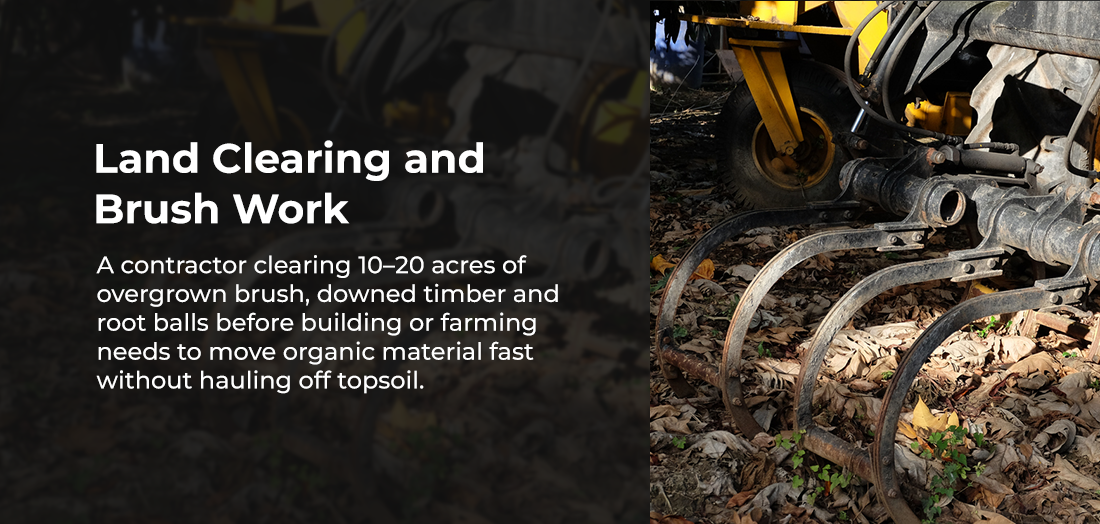
Land Clearing and Brush Work
A contractor clearing 10–20 acres of overgrown brush, downed timber and root balls before building or farming needs to move organic material fast without hauling off topsoil. A root grapple with 9-inch tine spacing is the right tool. Wide tines grab large material and let dirt fall through. The serrated cut edge digs under root systems cleanly. This is forestry and land clearing work where speed and soil preservation both matter.
Rock Removal and Field Prep
A farmer clearing a rocky field before the growing season needs rocks out and topsoil in place. A rock grapple with 3-inch tine spacing handles it. The tight spacing catches rocks while soil sifts back through on every pass — efficient and topsoil-friendly. For wider loads or mixed brush and rock jobs, an open sides rock grapple gives you more flexibility without sacrificing sifting performance.
Mixed Jobsites
A landscaper or contractor who regularly works sites with both brush piles and rocky debris, common in demolition cleanup or rural land prep, faces a problem. Neither a pure root grapple nor a rock grapple is ideal every day. A hybrid grapple gives operators a more versatile option for changing site conditions, especially when they need one attachment that can handle a mix of materials.
Cost, Durability and Whether to Rent or Buy
Root grapples and rock grapples are priced similarly. However, purchasing the right one is important, since a root grapple used on a rock job will be inefficient, and a rock grapple in heavy brush will clog constantly, bringing your productivity down.
Both grapple types are built from Grade 50 steel with greaseable pivot points for long service life. Rock grapples typically run heavier due to closer tine spacing and reinforced bucket construction — a 60-inch rock grapple weighs roughly 884 pounds compared to a 66-inch root grapple at roughly 746 pounds. That extra weight adds durability under abrasive conditions. Root grapples run lighter, which reduces wear on your machine’s lift capacity.
If you need a grapple for one seasonal job, renting is worth considering. If you’re pulling roots or clearing rock more than a few times a year, ownership pays for itself quickly.
How to Size Your Grapple for Your Skid Steer
Sizing comes down to machine horsepower and grapple width. Match the grapple’s hp rating to your machine first. Rock grapples and open sides models require 60+ hp. Hybrid grapples and root grapples require 55+ hp. Running a grapple under the recommended hp puts strain on hydraulics and reduces performance.
For width, your grapple should meet or exceed your machine’s track or tire width for efficient coverage. Rock grapples are available in 60–88-inch widths, hybrid models in 60–78-inch widths and root grapples in 66–85-inch widths. If you’re unsure about compatibility, reach out to the manufacturer. They’ll help you match the right grapple size to your machine.
Find Your Grapple at Stinger Attachments
Now that you know whether a root grapple, rock grapple or hybrid model fits your operation, it’s time to get the right tool in your hands. Stinger Attachments builds every grapple at our southern Minnesota facility and ships it directly to you. There’s no dealer markup, just honest pricing and flat-rate shipping to the lower 48.
Turn to us if you need help sizing your grapple for your machine. Contact us or call us at 507-416-7956 today to find a durable attachment built to handle your toughest jobs.