How Do Skid Steer Attachments Improve Efficiency on a Construction Site?

The right skid steer attachments turn a single machine into a multi-phase workhorse that can handle debris clearing, post-hole drilling, material staging, grading and specialized work without bringing in additional equipment. Quick-attach systems make it easy to swap from one job to the next in minutes.
With fewer machines on your construction site, you experience lower fuel costs, less maintenance and reduced congestion. From grapples and augers to land planes, trenchers and pallet forks, purpose-built attachments get specific jobs done faster than a general bucket can. Learn how skid steer attachments can improve your efficiency and maximize your machine’s earning potential.
Why Skid Steer Attachments Are Essential for Productivity
Here’s why skid steer attachments are crucial for construction site efficiency:
- Versatility across job phases: A single skid steer loader handles excavation, demolition, cleanup, material staging, grading and concrete work depending on what’s on the front of it. One machine can move through multiple phases of a construction job because you’re not locked into a single function. The equipment you already own becomes a versatile asset that covers more ground.
- Fast attachment swaps: Modern quick-attach couplers let operators change setups in minutes without calling in additional equipment or stalling the crew. A skid steer sitting idle between phases is a revenue drain. The right skid steer attachments keep it earning.
- Reduced equipment costs: Fewer machines on-site means less fuel consumption, lower insurance premiums, reduced transport expenses and less maintenance overhead. Contractors who need one machine to stretch across more of the job protect margins better than those running a separate machine for every phase. When you maximize skid steer productivity with the right tools, you’re getting more out of equipment that’s already part of your fleet.
Which Attachments Make the Biggest Difference on a Construction Site?
The specific attachment determines how efficient your jobsite becomes. The difference between a half-day operation and a two-hour one often comes down to using the right tool.
Grapple Buckets
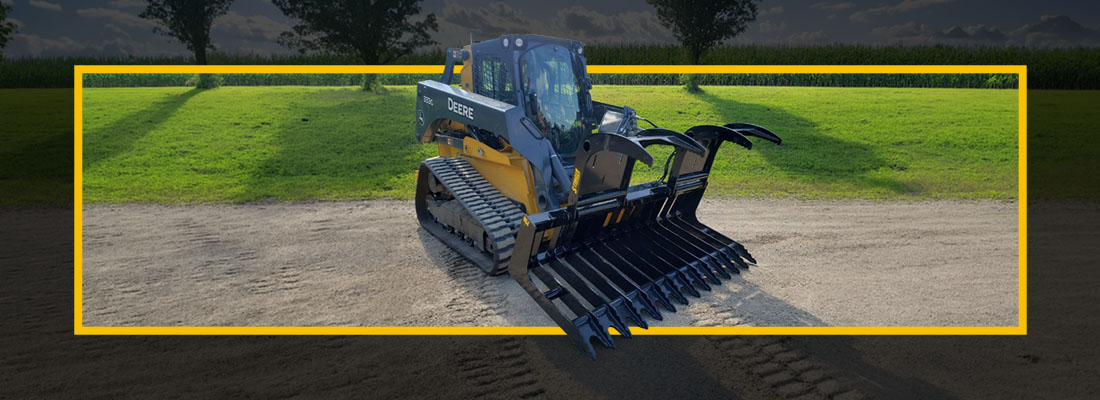
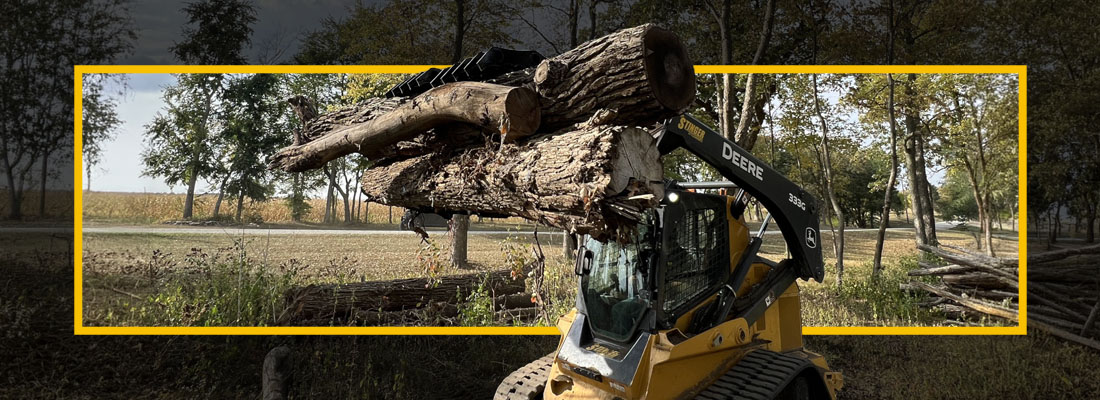
Post-demolition cleanup, site debris clearing and rock removal — that’s where a skid steer grapple bucket shines. The advantage? Single-motion grab-and-move.
Compare that to a standard bucket. Debris cleanup means repeated pushing, scooping, repositioning and lost material. A grapple grabs large volumes of irregular material in one motion — brush, debris, concrete chunks, rock, all of it. What takes multiple passes with a bucket gets done in a fraction of the time.
And when you’re working on tight construction zones where larger equipment can’t access, a demolition grapple bucket can make all the difference, leveraging the skid steer’s maneuverability into a genuine advantage.
Augers
A skid steer auger handles drilling footings, fence posts, sign bases and utility installations with precision hole placement and zero manual digging. You’re not mobilizing stand-alone equipment or scheduling a subcontractor. The auger on your existing machine eliminates the cost, scheduling delay and markup of hiring a drilling sub.
Augers are significantly easier on operators than a hand-held, stand-alone auger, especially when drilling repeated holes or working in tough ground conditions. This means less fatigue, fewer safety risks and faster completion times.
Pallet Forks
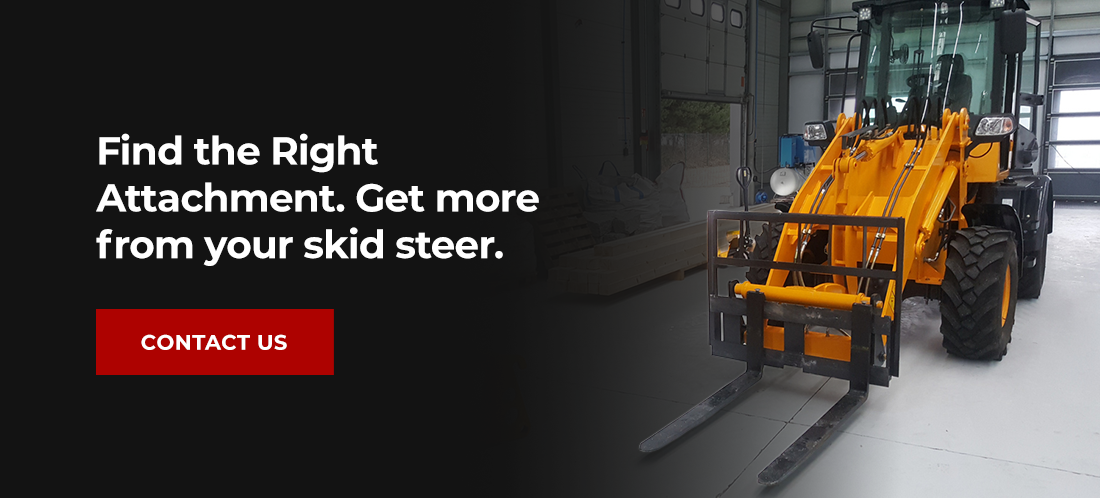
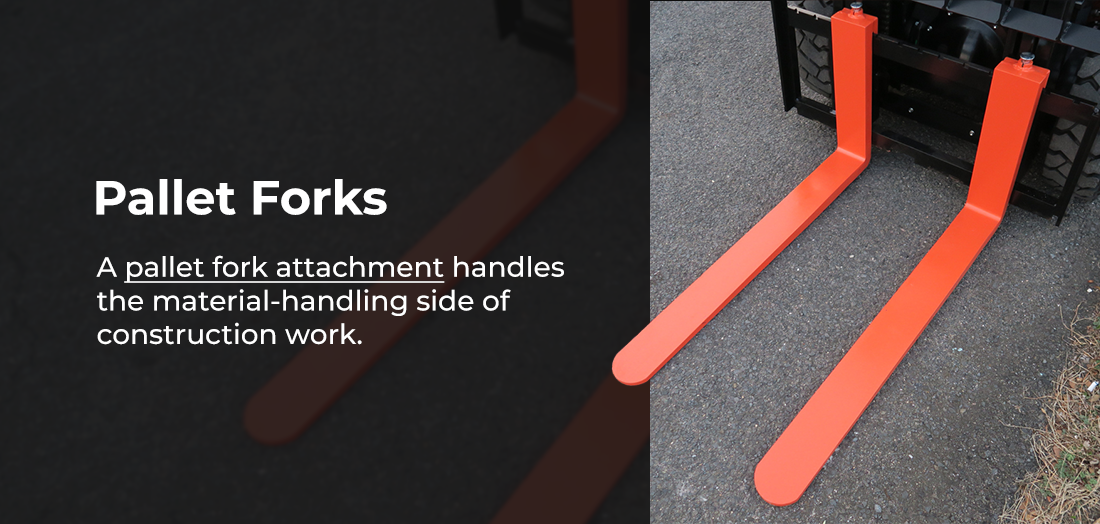
A pallet fork attachment handles the material-handling side of construction work. A skid steer with pallet forks moves palletized materials, bundled supplies and equipment across the site without a separate forklift.
Without forks, material staging relies on manual labor or a forklift rental. With pallet forks on the machine that’s already on-site, material moves faster, and the crew can stay focused on installation rather than logistics. One machine swapped from earth-moving to material-handling capability in minutes — that’s jobsite efficiency.
Land Planes
A land plane attachment is the tool for site grading and prep. It can handle surface leveling, fill material redistribution, road base grading and driveway prep. A land plane on a compact skid steer handles surface prep jobs that might otherwise require a grader, dozer blade or larger equipment, at a fraction of the equipment overhead.
Plus, the skid steer’s compact footprint makes it perfect for tight construction zones. Working slowly and making multiple passes gets the best results and produces the flattest, most consistent finish.
Concrete and Tooth Buckets
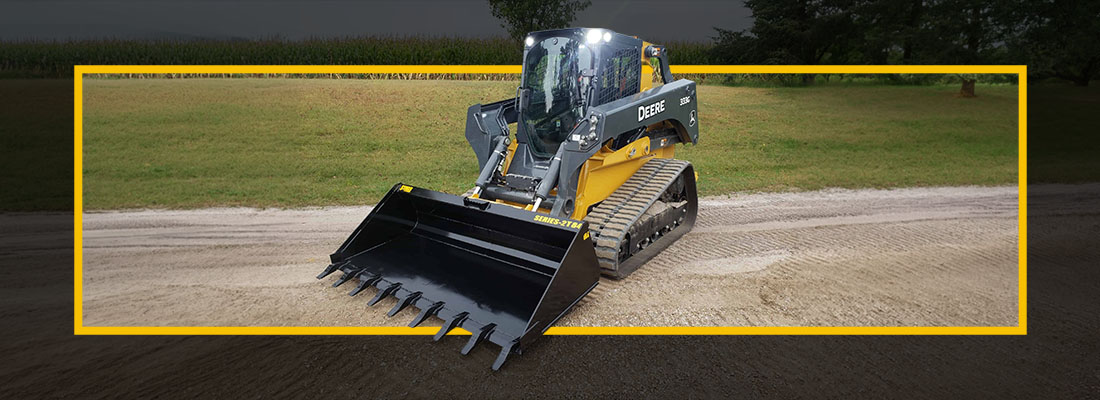
Hardpack soil, root-heavy ground, compacted material — that’s where a tooth bucket attachment earns its keep. The teeth break material loose instead of forcing the operator to repeatedly reposition, which is where smooth-edge buckets lose efficiency fast.
A concrete bucket attachment handles on-site concrete transport and precise pour placement without a separate concrete cart. Together, these multi-use attachments keep the skid steer earning through the excavation and foundation pour phases of a construction project without gaps.
ROI of Skid Steer Attachments
Attachments turn fixed costs into new capabilities without adding the overhead of another dedicated machine, making the ROI math straightforward. Here are examples of how that can play out on real jobs:
- Debris clearing: A general bucket requires multiple repositioning passes, results in lost material and takes longer. A grapple handles the same volume in significantly fewer passes with less repositioning and faster site turnover.
- Post-hole drilling: Subcontractors add markup and scheduling delay. An auger on the existing machine handles it on demand with no sub fees and no wait.
- Material staging: Manual labor or forklift rentals slow crews down. Pallet forks on the skid steer already on-site mean faster staging and no rental cost.
Attachments aren’t always the answer. Renting for a genuine one-off specialty job can be the wiser choice, while high-volume operations may justify a dedicated machine.
When you do invest in attachments, get crews familiar with what they can do before the first billable job starts — you’ll see better results from day one. Track productivity metrics like time-per-job and equipment utilization to see exactly where attachments are delivering returns.
How to Choose the Right Attachments for Your Operation
To choose the right attachments, think about how often you’ll need them for your specific jobs. In general, it’s best to buy construction equipment attachments for regular use and rent them for one-off applications.
Checking compatibility before buying is also important. Whether you’re running a skid steer or compact track loader, hydraulic flow requirements, machine lift capacity and quick-attach coupler fitment all affect whether an attachment performs as expected. Standard flow versus high-flow hydraulic systems make a difference for hydraulic attachments like augers and grapples.
Additionally, think in phases. A core set of three to five attachments can maximize skid steer versatility while covering most construction project phases without fleet bloat. For contractors running multiple projects, a versatile attachment lineup lets one machine rotate across jobs rather than sit idle.
Find the Right Attachment for Your Jobsite at Stinger Attachments
The right skid steer attachments can keep crews moving and costs down. If you’re ready to get more from the equipment already on your jobsite, Stinger Attachments has the lineup to make it happen.
Every attachment we build uses higher-grade steel designed for demanding commercial work. We also sell direct to customers, so you’re not paying dealer markup. We offer flat-rate shipping to the lower 48 states, and you can browse and order online 24/7. If you’ve got compatibility questions or need help finding the right fit for your machine, contact our team online today.