
What Are the Best Tools for Clearing Snow in Rural Areas?
Rural properties call for a different snow management playbook than residential ones. Long gravel lanes, open pastures, barnyard pads, and rough acreage need more capacity than a walk-behind snowblower delivers, and the right machine-mounted attachment turns a slow morning into a quickly cleared lane.
The best tools for clearing snow in rural areas can be mounted on a machine you already run. Skid steer attachments and tractor-mounted equipment are built to handle the volume and terrain of farm-scale ground, while manual tools handle the tight spots that call for a closer touch. This guide shows you which category best fits your setup, ground, and snowfall.
Skid Steer Snow Attachments
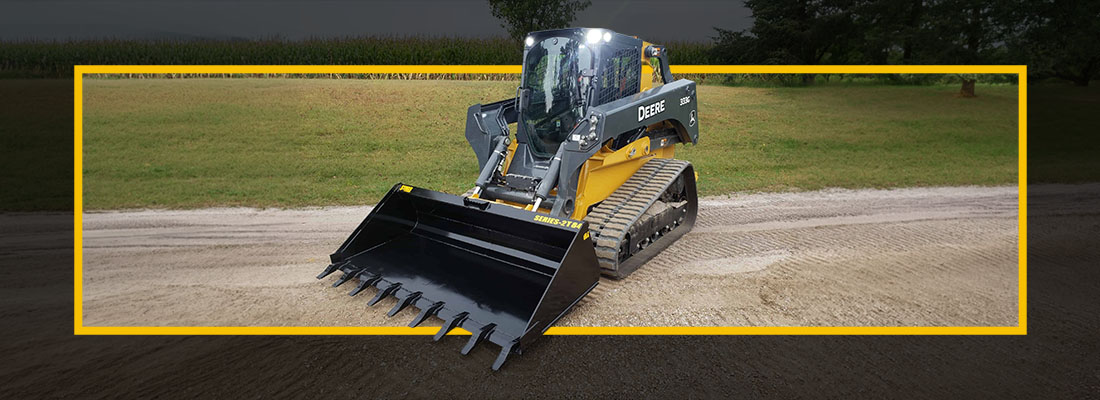
Skid steers earn their spot on rural properties because they turn on a dime, lift with serious hydraulic force, and let you swap skid steer snow removal attachments in seconds.
Snow Pusher
A skid steer snow pusher uses a containment box design that holds snow in front of the blade as the machine drives forward, letting you run one long, continuous pass across open ground. This makes it the go-to attachment for moving serious snow volumes across long gravel lanes, barnyard pads, and wide pasture areas.
For bigger skid steers and heavier snow loads, a heavy-duty snow pusher steps up the footprint while keeping that core advantage intact.
Rubber cutting edges flex over uneven gravel and protect the surface, while steel edges deliver a cleaner scrape on packed snow and ice. An optional dragback bar extends that reach, pulling snow away from building faces, fences, and tight corners for a more complete pass. Against a bucket, the pusher wins on open ground by moving more snow in a single continuous run.
Snow Bucket
A skid steer snow bucket is purpose-built for snow. It is taller and higher-capacity than a standard dirt bucket, engineered specifically to scoop and carry snow rather than push it.
The process is simple: lift and pile. The bucket scoops the snow, lifts it, and deposits it exactly where you choose. This makes it the right call for relocating snow to a pile, loading it into a truck, or clearing tight areas that call for more control than a straight push. That precision is why a snow bucket works for skid steers, handling snow too wet and heavy to move efficiently any other way.
The added lift capacity behind skid steer snow buckets means fewer repeat passes for the same load. Raising and lowering the bucket repeatedly adds cycle time, so the pusher wins on pure speed, but the bucket earns its place when precision matters more than pace, or when snow is too wet and heavy to push efficiently.
Tractor Snow Removal Attachments
Tractors shine on rural properties with long, wide runs, including farm lanes stretching hundreds of feet, large open lots, and anywhere the tractor is already your primary workhorse. The tractor covers more ground per pass on big acreage, while the skid steer wins in tighter, more confined spaces.
Tractor Snow Pusher
A tractor snow pusher shares the same core mechanic as its skid steer counterpart: a containment box built for long, continuous passes. The difference is the mount. Rather than a skid steer quick-attach system, this pusher, often searched as a snow plow for compact tractor setups, bolts onto the front loader of a utility or compact tractor built to handle 40 to 75 horsepower machines in Stinger’s SP Series.
Wider properties and heavier snowfall call for a heavy-duty tractor snow pusher, built with a 30-inch by 30-inch box and widths from 6 feet to 14 feet.
The rotating or oscillating mount option is worth a look for farm terrain. It lets the cutting edge follow uneven ground instead of riding over it, leaving a cleaner surface on rough or graded lanes. The same rubber-versus-steel edge choice applies here, too.

Tractor Snow Bucket
A tractor snow bucket mounts to the front loader for lift-and-dump snow clearing, carrying snow from barn entrances, gates, or access points to a pile that keeps the path clear. Off-season, it also handles mulch and sawdust.
Stinger’s snow buckets for tractors come in widths from 6 feet to 10 feet, with a struck capacity from 25.8 cubic feet at 6 feet up to 36.5 cubic feet at 10 feet. It is built from 3/16 Grade 50 steel, with an optional Euro Global mount and see-through design. Mount style and sizing for a front loader are what set this one apart from its skid steer counterpart.
PTO Snow Blower
Powered by the tractor’s power take-off (PTO), a PTO snow blower for tractors is the right call for the toughest snow scenarios:
- Accumulations of 10 inches or more
- Long, narrow lanes where windrows shrink usable width
- Tight spots along fence lines
- Lanes bordered by steep ditches or structures
This tractor snow blower attachment throws snow clear of the surface instead of building a pile, solving the windrow problem for good.
A PTO snow blower does call for adequate horsepower, and wider models demand more power. These attachments also tend to carry more complexity and may cost more than a pusher or bucket. Confirming PTO horsepower and hitch compatibility before you buy means the right fit from day one.
Before adding a blower to your lineup, it is worth preparing your farm equipment for winter so the rest of your gear is ready to work alongside it.
Manual Snow Tools for Smaller Areas and Finishing Work
Some spots are small and tight enough to call for a closer touch than a machine attachment provides. That is where manual tools step in:
- Snow shovels handle hands-on clearing around porch steps, barn doorways, and tight gate openings.
- Ice scrapers break up the icy glaze that machine work leaves behind on walkways.
- Salt serves as the finishing touch for icy patches left after the real clearing is done.
These tools work best alongside snow equipment for skid steers on farm acreage, picking up right where the equipment leaves off.
How to Choose the Right Snow Tools for Your Property
Choosing between a pusher, a bucket, and a blower comes down to four variables working together:
- Machine type: Both skid steers and tractors point toward a pusher or a bucket, and the right pick depends on the three variables below.
- Property terrain and layout: Large, open, flat ground favors a pusher for speed across long passes, while snow that needs relocating to a pile or clearing from a tight space favors a bucket.
- Typical snowfall depth: Light to moderate snowfall under 8 to 10 inches is efficient work for a pusher. Heavy, wet, or deep snow calls for a bucket or a blower once accumulation passes 10 inches.
- Surface type: Gravel lanes need a rubber cutting edge that flexes with the surface, while paved or packed surfaces handle a steel edge for a cleaner finish.
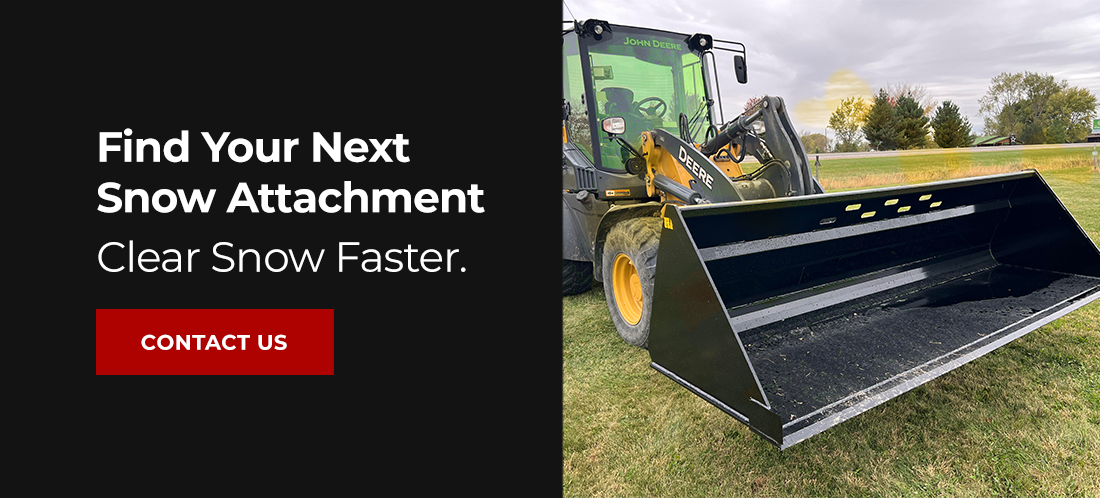
Find Your Next Snow Attachment at Stinger Attachments
Once you know which attachment fits your machine and your property, Stinger Attachments is where you go to get it done. Every one of our snow removal attachments for skid steers and tractors is designed and built in-house using high-grade steel, and they are in their element on long lanes, open pasture, and rough acreage.
Whether your machine calls for a pusher or a bucket doing double duty in the off-season, you will find the right width and mount style in our lineup of snow attachments for skid steers and tractors. Browse the shop online 24/7, or call with questions before you buy.