Different Types of Rock Grapples

Nothing stops a project faster than a bent tine or a bucket full of dirt. When clearing land for a barn, pulling stumps from a pasture or sorting demolition debris, the wrong grapple wastes time, fuel and patience.
Understanding the different types of rock grapples helps you choose the one that’s right for you, turning your tractor or skid steer into a land-clearing powerhouse. American-made rock grapples, built with Grade 50 steel and available at direct-to-consumer pricing, deliver commercial-grade durability without dealer markup, so you can get what you need and leave the rest behind.
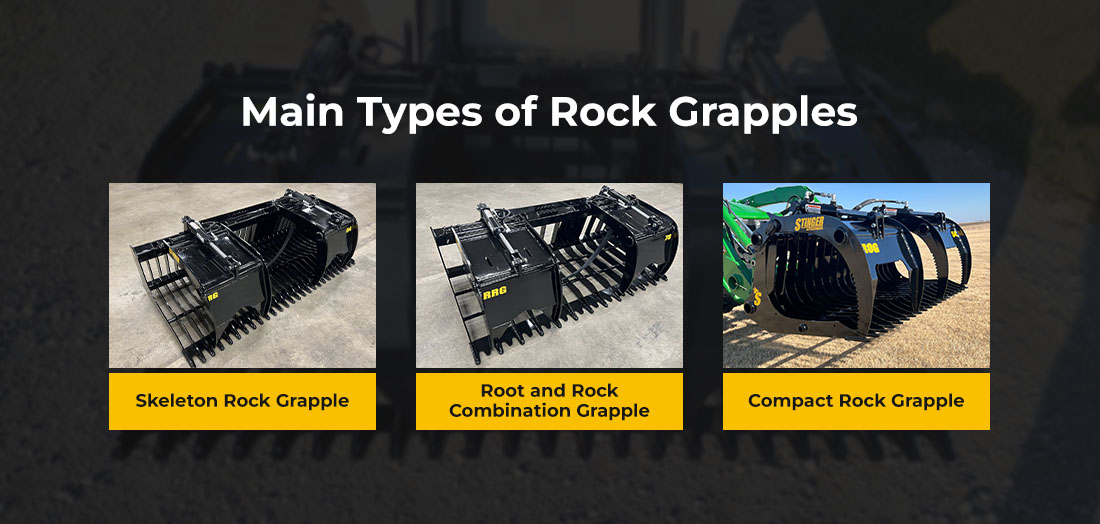
Main Types of Rock Grapples
Choosing a rock grapple is about matching the tool to your machine and your job. Each grapple design serves a specific purpose, from pure rock picking to hybrid brush-and-rock clearing.
Skeleton Rock Grapple
This is the pure rock picker. The RG-Series grapple has an open skeleton bottom that lets dirt fall through while holding rocks in place. If you’re clearing land and want to preserve topsoil, this design keeps the good stuff on the ground and lifts only what you need to move.
It’s built for heavy-duty rock picking, pile sorting and situations where efficiency matters more than versatility. The open tines mean less weight per load and fewer trips to the dump pile.
Root and Rock Combination Grapple
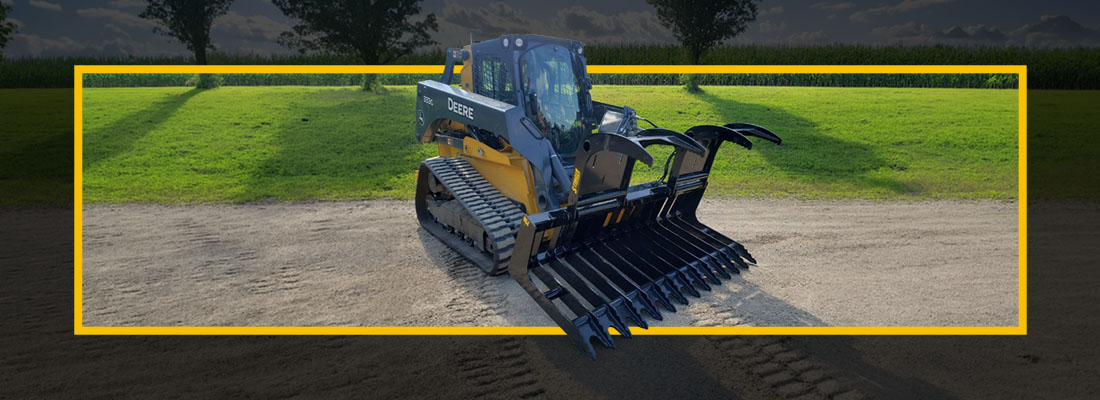
The RRG-Series is a hybrid bad-boy. It combines the serrated cutting edge of a root grapple with the geometry of a rock grapple, so you can tackle brush clearing and rock moving without swapping attachments.
This one’s for the weekend warrior or farmer who needs versatility — pull a stump in the morning, sort rocks in the afternoon. The serrated edge tears into roots and vines that a smooth bucket would slip over, while the tine spacing still lets smaller debris fall through.
Compact Rock Grapple
Small tractor owners face a specific problem: finding an attachment that’s tough but light enough not to tip the machine. The CROG model is built for tractors in the 15-65 horsepower (hp) range.
It delivers the same durability as larger models but in a size that won’t overload your hydraulics or lift capacity. If you’re working in tight spaces — clearing fence lines, cleaning up around buildings or managing hobby farm property — this type of rock grapple gives you the grab you need without the bulk.
6 Features to Look for in a Quality Rock Grapple
Not all types of rock grapples are built the same. A cheap import might look similar on paper, but the materials and design details determine how long it lasts and how well it works. Here’s what separates a professional-grade grapple from a headache.
1. Efficient Sifting Design
The skeleton design is about efficiency. Hauling dirt increases fuel costs, adds unnecessary weight to your machine and wastes time. A skeleton grapple lets soil fall back to the ground where it belongs, so you’re moving only what you need. That means lighter loads, faster cycles and less wear on your tractor. If you’re clearing acres, efficiency adds up fast.
2. Durable Grade 50 Steel Construction
Cheap rock grapple types often use mild steel, A36, which bends under pressure. Grade 50 steel has a yield strength of 50,000 pounds per square inch (psi), meaning it can take a harder hit from a rock without bending or cracking.
Quality grapples also use 3/8-inch or 1/2-inch thick tines, depending on the model. Thicker steel means fewer repairs, less downtime and a grapple that works as hard on year five as it did on day one.
3. Optimal Tine Spacing for Debris Management
Standard 3-inch tine spacing is the Goldilocks zone — tight enough to catch melon-sized rocks, open enough to let wet dirt clumps fall through. Go too tight, and you’re hauling mud. Go too wide and smaller rocks slip out. This spacing handles most land-clearing jobs without forcing you to choose between losing material or dragging unnecessary weight.
4. Independent Grapple Arms for Versatility
Independent dual grapples give you flexibility. If you grab a large rock on the left side and a small log on the right, the independent arms clamp both securely. A single clamp would either leave the smaller item loose or force you to reposition it. Independent arms adapt to uneven loads, so you spend less time fiddling and more time working.
5. Aggressive Serrated Cutting Edges
A serrated front edge is a functional tool for tearing into roots and vines. A smooth bucket slides over fibrous material, forcing you to dig deeper or reposition. The toothed edge saws through roots, letting you pull stumps and clear brush in one pass.
If you’re dealing with overgrown property or demolition debris with embedded vegetation, that serrated edge makes the difference between clean removal and repeated attempts.
6. Universal Compatibility for Easy Integration
Quality grapples come with a universal quick-attach plate that fits Bobcat, John Deere, Kubota, Westendorf and other standard skid steer and tractor mounts. You shouldn’t need custom fabrication to hook up an attachment.
Most grapples also require standard hydraulic flow with 3,000 psi cylinders, which most modern machines already have. Check your machine’s specs before buying, but universal compatibility means you’re not locked into a single brand or configuration.
Matching Your Machine to the Right Grapple
Comparing the different types of rock grapples against your machine’s capabilities helps you size correctly.
Horsepower and Lift Capacity
Match the grapple weight to your machine’s lift capacity, and leave room for the load. A massive grapple on a tiny tractor can tip the machine forward or stress the hydraulics.
As a rule of thumb, the CROG fits 15-65 hp machines. Heavy-duty models are best suited for 50+ hp machines. Check your tractor’s rated lift capacity, subtract the grapple weight and make sure you have at least 500 pounds left for rocks or debris.
Grapple Width and Maneuverability
The grapple should be at least as wide as your machine’s tires to cover your tracks, but not so wide that it becomes unwieldy in tight woods or between fence posts. A 72-inch grapple is the bestseller for good reason — it matches most midsized tractors and skid steers without sacrificing maneuverability. Wider models handle bigger piles but limit where you can work.
For ultra-tight spaces, the Compact Clam Grapple (CCG) offers a narrower profile with full clamping power. The clam-shell design grips rocks from all sides, making it ideal for fence line clearing, tight pathways or residential properties where a full-width skeleton grapple won’t fit.
Measure your tightest jobsite before you buy — a grapple that can’t navigate your work area is a grapple you won’t use.
Invest in American-Made Quality for Your Toughest Jobs
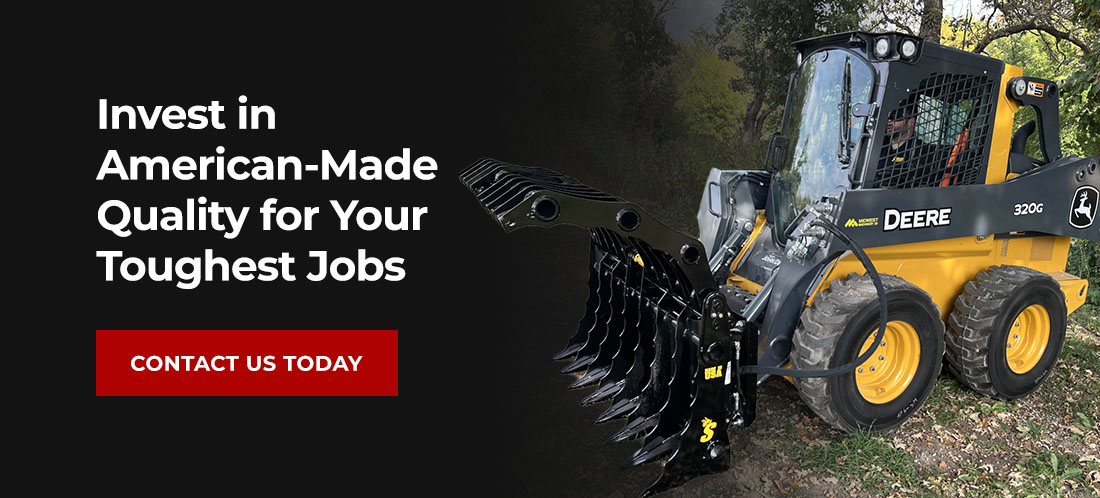
When you’re ready to invest in a rock grapple that works as hard as you do, Stinger Attachments delivers American-made quality with direct-to-consumer value.
Our team takes pride in building attachments with Grade 50 steel, greaseable pivots and universal quick-attach compatibility, so you get commercial-grade durability without the dealer markup. From clearing brush to sorting rocks to tackling property maintenance, we stand behind every attachment we build.
Rock Grapple Attachment Frequently Asked Questions
What are the main types of rock grapples available?
Stinger offers several rock grapple models distinguished by tine thickness and frame strength. Types include standard duty models with 1/2-inch tines, heavy-duty models with 5/8-inch tines, and extra heavy-duty (XHD) models with 3/4-inch tines, each designed for different job intensity levels.
How do rock grapples differ from root grapples?
Rock grapples feature tight tine spacing ideal for soil sifting and removing rocks, concrete, and heavy debris with superior sorting capability. Root grapples have wider tine spacing designed for pulling up roots and are better for moving brush piles while leaving dirt behind.
What materials can rock grapples handle?
Rock grapples can grab and handle root balls, large rocks, demolition debris, concrete chunks, and lumber. They are versatile enough to perform material sifting and scarifying operations on various job sites.
What are the key design features that make rock grapples effective?
Rock grapples feature Grade 50 steel frame construction, over 30 inches of jaw opening for large loads, 3-inch tine spacing for material separation, serrated cutting edges for brush, dual hydraulic cylinders for secure clamping, and a universal skid steer mount plate.
Not sure which model fits your tractor? Contact Stinger Attachments today.