Which Skid Steer Attachments Are Best for Rocky Terrain?

Rocky terrain eats standard attachments alive. Bent buckets, cracked welds and shattered cutting edges mean lost hours, missed deadlines and repair bills. When you’re running a tight operation, every minute of downtime cuts into your profit. Using the wrong attachment on tough ground is like throwing money into a gravel pit.
Understanding which skid steer attachments are best for rocky terrain means knowing the tools that will actually hold up under stress. This guide gives you a breakdown of the top options for sifting rock, clearing brush and digging through compacted soil — plus the key features that separate rock-ready equipment from attachments that won’t last a season.
The Costs of Using the Wrong Attachment on Rocky Ground
Moving material loaded with rock tests the limits of your equipment with every scoop — and general-purpose buckets and blades fail that test fast. The consequences appear quickly:
- Bent and deformed steel: General-purpose steel can’t handle constant rock impact and folds under pressure.
- Cracked welds at stress points: Bucket corners and attachment points fail when welds aren’t designed for heavy use.
- Damaged cutting edges: Soft edges chip, deform or wear through after a few passes on rocky ground.
These failures cost you repair bills plus lost revenue. Every breakdown means your machine sits idle while you source parts or wait for repairs. A budget skid steer bucket may seem cheaper until you factor in lifetime costs — $7,800 total versus $4,200 for a quality bucket that costs more up front.
Top 6 Skid Steer Attachments for Conquering Rocky Terrain
Jobsites loaded with rock demand specialized equipment engineered to handle high stress. The range of diverse skid steer attachments means you can match the right option to your job requirements.
1. Heavy-Duty Rock Bucket
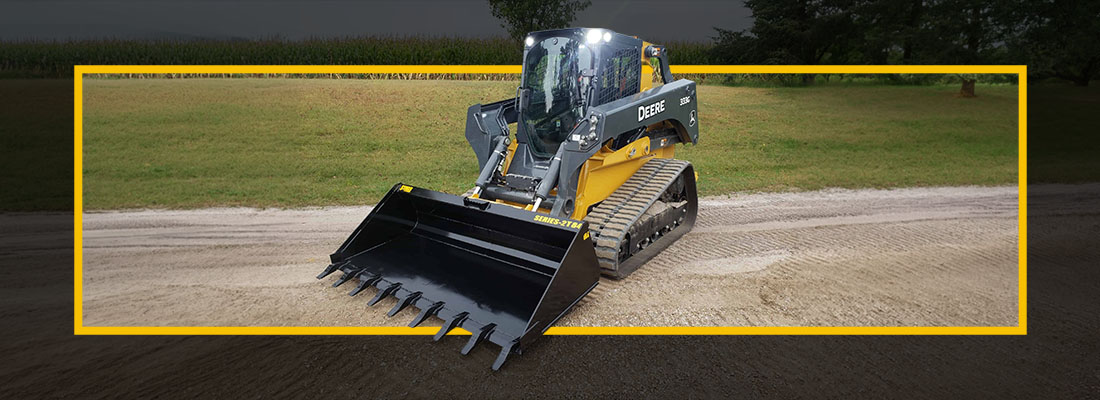
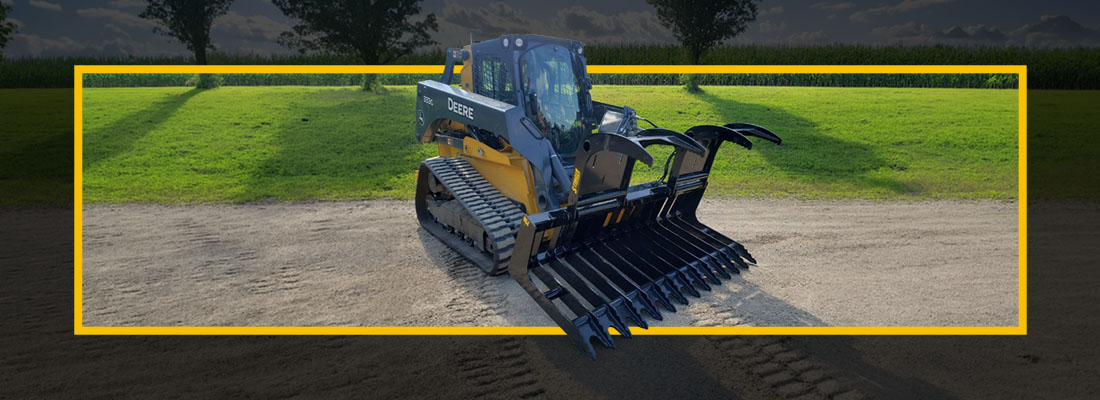
This is your primary workhorse for sorting and moving rocky material. Heavy-duty rock buckets use reinforced tines spaced to let dirt and smaller debris sift through while retaining larger rocks. Scoop mixed material, shake it and what’s left in the bucket is clean rock ready to haul or pile.
The key advantages that make this bad boy the top choice include:
- Sifting efficiency: Tines allow you to separate rock from soil in one pass instead of hauling mixed material and sorting it later.
- Reinforced construction: Heavy-gauge steel and gusseted tines handle the weight and impact of rock without bending or cracking.
- Multiple size options: Tine spacing varies by model, so you can control what size material stays in the bucket and what falls through.
2. Skeleton Rock Bucket
The skeleton rock bucket takes the concept further for jobs where leaving soil undisturbed is critical. The wider tine spacing and open design let you sift larger material faster while preserving topsoil underneath. This specialized design works best for fist-sized rocks or larger.
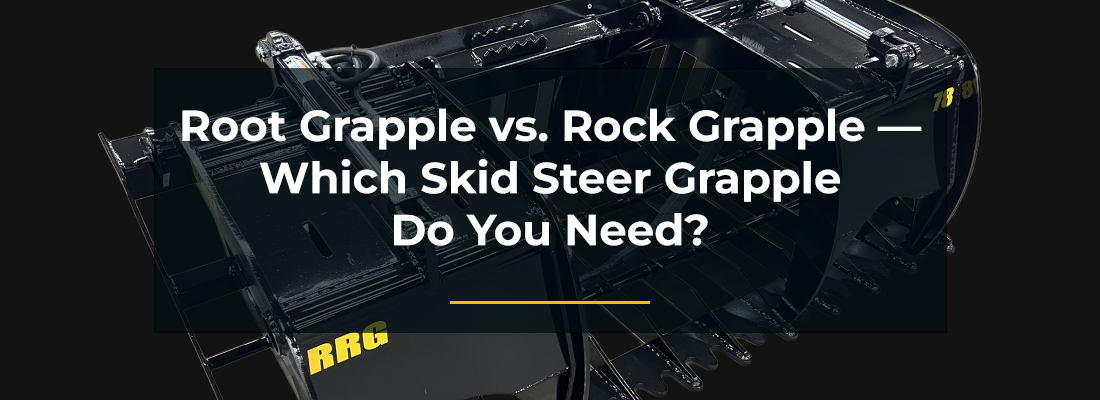
3. Grapple Bucket
Grapple buckets are a popular attachment for a reason — they grab, hold and move irregular material that other attachments can’t handle. Rocky terrain often comes with brush, debris and mixed material, and a grapple bucket handles it all. The grapple clamps down on tangled vegetation and stone in one grab, making quick work of site cleanup after clearing or excavation.
4. Brush Cutter With Rock Guard
Before you get to the rock, you often need to clear brush and small trees. Standard brush cutters will handle vegetation, but rocky terrain demands a model equipped with a rock guard. Your skid steer brush cutters need that guard to protect the cutting mechanism from damage when it encounters buried rocks. Without it, a single impact can shatter blades or damage the drivetrain.
5. Stump Grinder
Rocky terrain and tree stumps go hand in hand, and those stumps come with root systems tangled around buried rocks. Quality stump grinders power through unexpected rock contact without the cutting teeth shattering. For contractors who need versatility, a rock and stump removal attachment offers an alternative approach.
6. Reinforced Trencher
Digging utility lines or irrigation channels through compacted, rocky soil requires a trencher constructed specifically for those conditions. You need carbide-tipped teeth designed for rock penetration and reinforced chains that can take the shock load. Regular maintenance of trencher teeth and chains keeps the attachment running strong.
Key Features That Define a Rock-Ready Attachment
When deciding which skid steer attachments are best for rocky terrain, focus on these critical features:

- Steel grade and abrasion resistance
- Strategic reinforcement and weld quality
- Replaceable vs. welded cutting edges
- Compatibility with your skid steer’s specifications
Use these markers as your guide for selecting equipment engineered to work as hard as you do.
Steel Grade and the AR400 Difference
Abrasion-resistant (AR) steel is engineered to withstand the kind of wear and tear of rocky terrain. AR400 steel has a high Brinell Hardness Number (BHN), which means it resists the scraping, gouging and impact that would deform softer standard steel.
Strategic Reinforcement and Weld Strength
Stress concentrates at specific points — bucket corners, tine bases, mounting plates — and that’s where failures happen. American manufacturing quality reveals itself in the details: gussets that distribute load, cross-bracing that prevents flex and deep-penetrating welds. Properly reinforced rock buckets won’t crack at the attachment points after a season of hard use.
Replaceable Cutting Edges vs. Welded Edges
Cutting edges eventually wear down from constant rock contact. Bolt-on replaceable edges let you swap a worn edge with basic hand tools. You’re back to work the same day. Welded edges mean the attachment sits idle while you transport it to a shop, wait for the repair and haul it back.
Matching Attachments to Your Skid Steer Specs
Even the toughest attachment will fail if it exceeds your machine’s capabilities. Check your skid steer’s rated operating capacity (ROC) before you buy — this tells you the maximum weight the machine can safely lift. Hydraulic flow, measured in gallons per minute (GPM), matters for powered attachments like brush cutters, augers and tillers.
Make sure you understand how to properly attach and connect your equipment to achieve optimal performance and support safety.
How to Choose the Right Attachment for Your Jobsite
You’ve seen the options, and you understand what makes an attachment rock-ready. Now it’s time to make the call.
1. Assess Your Most Common Jobs
Start with what you do most often. Your primary attachment should address your most frequent need:
- For drainage or landscaping work, heavy-duty rock buckets efficiently sort rock from soil.
- When clearing land with large rocks while preserving topsoil, skeleton rock buckets deliver the best results.
- Land clearing in wooded, rocky areas demands a brush cutter with rock guard protection.
- If you’re breaking up hardpan or compacted soil before digging, start with a ripper or tooth bucket.
- Grapple buckets excel at grabbing and relocating irregular material, like brush mixed with rock, making them invaluable for mixed-debris jobsites.
2. Invest in Durability vs. Paying for Repairs
Cheap equipment costs more in the long run. For example, rock buckets priced $400 below comparable models might use thinner steel and weaker welds, but that up-front discount disappears fast, potentially after one or two major repairs. The bigger loss comes from downtime when the attachment sits broken, and you can’t bill for work.
Think of it this way — over five years, buying three cheap attachments costs significantly more than investing in one quality piece built to last.
3. Partner With a Manufacturer Who Knows Downtime Is Not an Option
Manufacturers who understand professional contractors know that equipment failure means lost revenue. American manufacturers who maintain close customer relationships understand the real-world cost of downtime. They offer support when you have questions and services like flexible financing options that make quality equipment accessible.
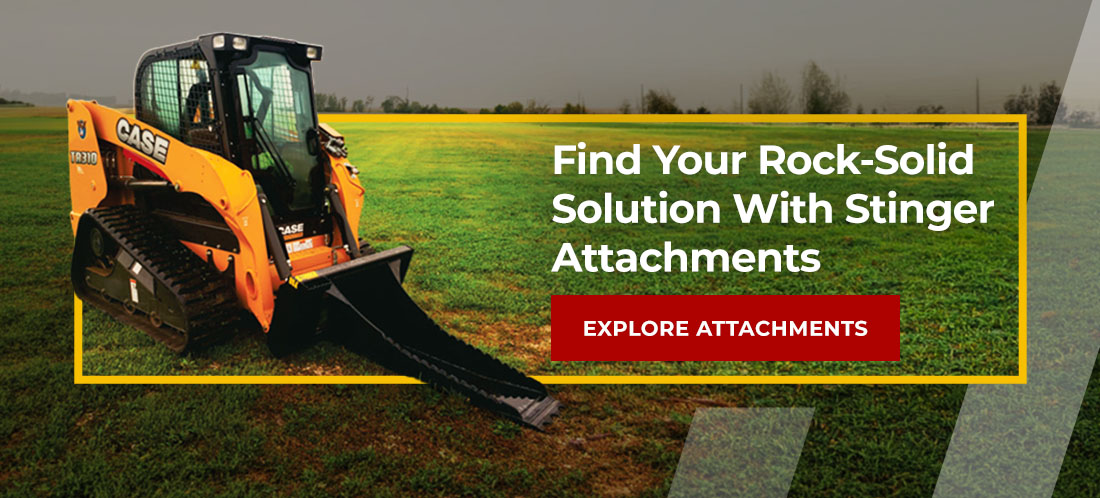
Find Your Rock-Solid Solution With Stinger Attachments
When downtime isn’t an option and your jobsite demands equipment that won’t quit, Stinger Attachments delivers the best skid steer attachments for rocky terrain. Built in Minnesota for tough American jobsites, every attachment we manufacture uses top-quality steel and proven engineering designed to handle the strain. We’re fabricators who take pride in building equipment that works as hard as you do — and we ship directly to you at competitive prices.
Browse our bestselling skid steer attachments or reach out with questions. We’re here to help you get the job done right.